[title size=”H3″ bold=”no” align=”left” color=”#226dae” style=”” border_color=”” margin_top=”” margin_bottom=””]Among instability and rapid urbanization, Africa can suggest global solutions[/title]
[title size=”H5″ bold=”no” align=”left” color=”#226dae” style=”” border_color=”” margin_top=”” margin_bottom=””]Oumar Sylla, regional director of UN-Habitat, talks about experiences and challenges in more than 30 countries[/title]
Published 15 of January 2023 – © riproduzione riservata
More than 200 projects developed and implemented from 2014 in the Sub Saharan African Region. About 200 million € of value of projects implemented in 33 countries. UN-Habitat (https://unhabitat.org/africa-region) is an important player in urban and architectural actions oriented to a structural transformation and a well-coordinated urbanisation. Oumar Sylla, based in Nairobi, Kenya, is the Director for the Regional Office for Africa in the United Nations Human Settlements Programme (UN-Habitat). The text has been collected by Michele Roda in a dialogue on December 5th, 2023.
The most urbanizing continent in the world
The most impacting phenomenon in contemporary Africa is undoubtedly the rapid trend of urbanization. It’s a very intense process, reinforced by the effects of the climate change: recently we have seen flooding and weather patterns in Mozambique and in Malawi. But also many parts in Western Africa has been hit by climatic extreme events in the last months, in addition to rampant conflicts. Accordingly, there are very strong flows of people moving from rural to urban areas. Revisiting the design models of our cities (not just the big, but also the secondary ones) is a topical task the architectural culture must face, with the ambition to accommodate people reaching a good balance in terms of health settlements, sustainable infrastructures, economic development. To do this, we need to make rules guiding to construct and to protect cities. It’s a sensitive point, as far as we cannot ignore that more half of the African urban population is living in informal settlements that are more vulnerable to effects of climate change. For sure a physical planning has to take into consideration the specificity of the sites and their activities. It cannot be a European way to plan: in Africa the collective dimension is wider and more intense. Expectations and habits of the communities are fundamental. Through regulation and governance, we must control urban growth and sprawl protecting the environment.
Without peace there is no development
Today we have 2 challenges, globally speaking. Not only in Africa, all over the world. The first is climate change, the second concerns wars and conflicts. Africa has many hot spots dealing with both conflicts and climate change, and it means intense displacement of populations. How can you think to design if you’re living in precarious shelters? But I think we need to focus on the opportunities these conditions are opening because exactly displacement can be a triggering element. There is space to reflect about different models of housing. As UN-Habitat we’re having great experiences in Burkina Faso, in Somalia, in Mozambique, researching and spreading resilient homes, but also buildings for schools, hospitals, community centres, responding to community’s needs.
Urban models and building materials
New inspiration for cities helps people to retrofit their own houses, to adopt solar systems, to reach a green compliance. We cannot build as we have done in the past, we cannot do business as usual. Together with the aim to design resilient and less polluted neighbourhoods, it’s very important to innovate the building materials in the direction of adaptation and decarbonization. In Africa it means to focus deeply on the specific context: in terms of culture, of weather, also of religion. There are African solutions that could be also exported in the world: the bamboo technologies, so important in Kenya or in Tanzania among other countries, can become a factor also in European and Western industries of constructions. Bamboo can give different building products and it’s very sustainable. But the world can learn approaches from here also about vernacular architecture. There are successful and promising case-studies in Morocco or in Mali, out of the emergency the country is living now. They’re teaching levels of protection of cultural heritage in critical situations, researching about the characters and identity elements. They’re based on a strong knowledge of the local traditions, mainly in the ability of the buildings to adapt to the climatic conditions.
Architects and cooperation
To get sustainability and resilience in contemporary cities and buildings, the role of architects is fundamental. In Africa there are many International architects working with International institutions. Especially in the urban sector, cooperation is always a good choice, it’s the occasion to share experiences. I think architecture is a science and the science is the same all around the world. Think to Italian cities, they’re much older than the African ones. They can be useful and inspiring examples about different points: how to build, how to plan, how to manage. But a customization of the practices, putting them into the context, is fundamental. It’s important to “africanize” the models and the approaches. And this step sometimes is missing. In this line UN-Habitat supports the design activities creating debate with populations and international bodies.
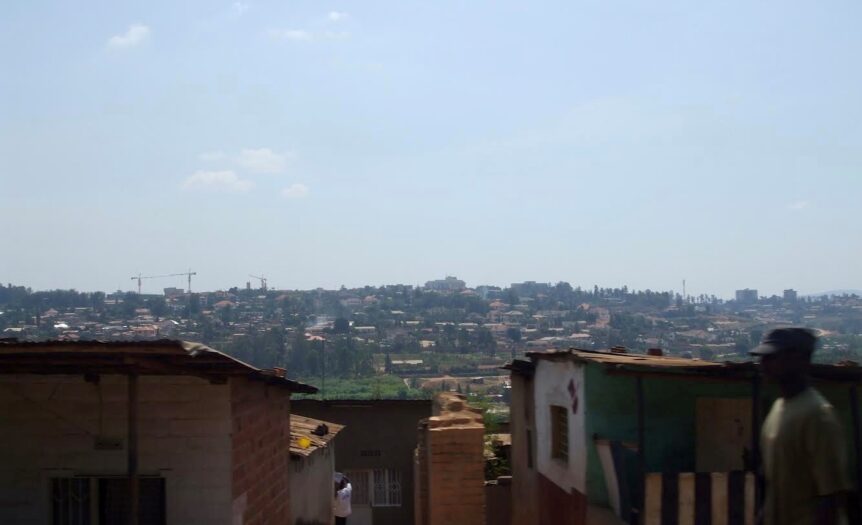
Front image: Kigali, Ruanda (photo by Ilaria La Corte)